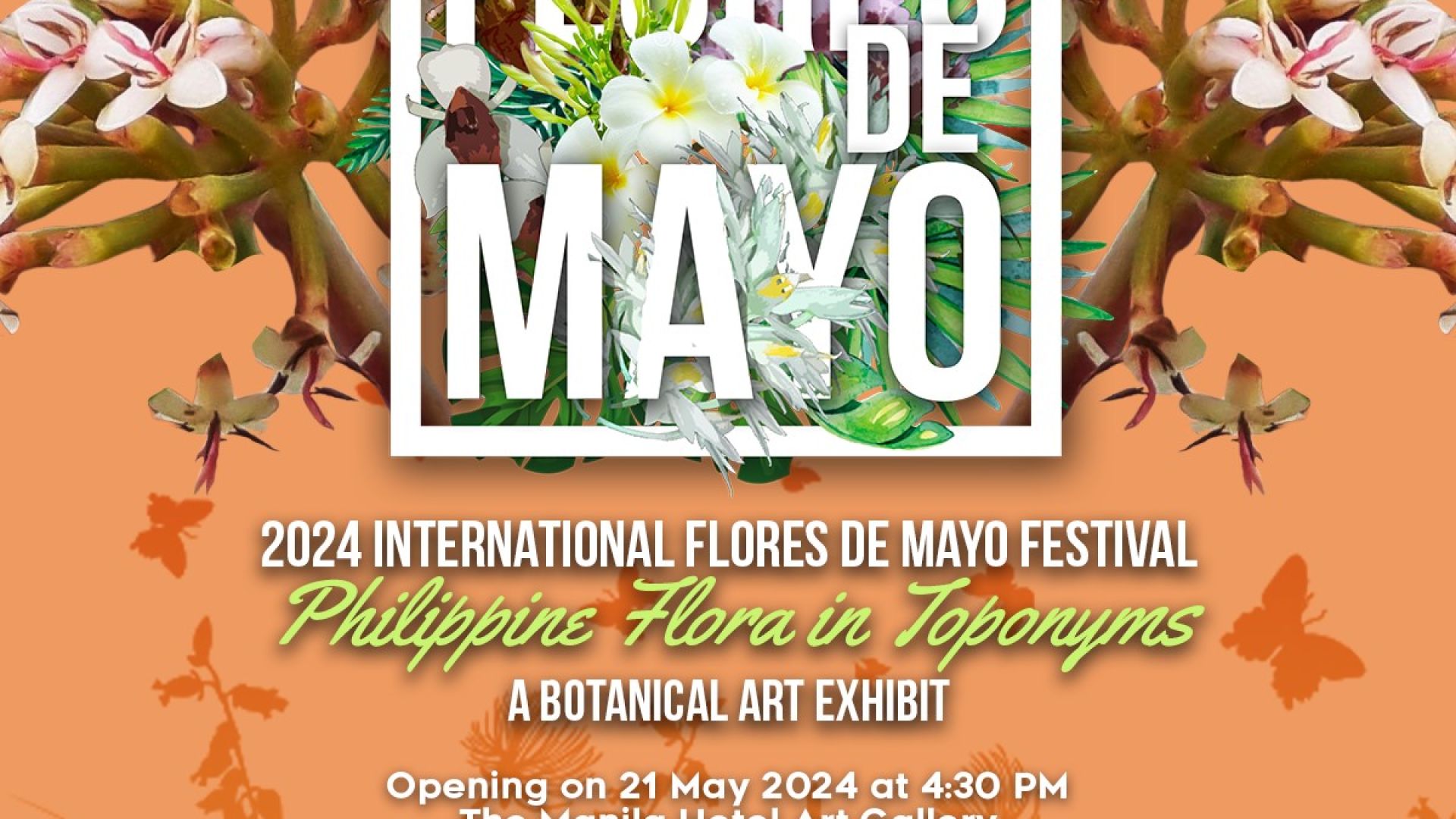







In our global economy today, identity of place is highly valued for economic, geopolitical, and socio-cultural ownership. The Faura Project, an Ermita-based non-profit group, opens a visual public discussion on the importance of toponym or name of place via a botanical art exhibition dubbed the Philippine Flora in Toponyms, that will run from 21 to 31 May 2024 at The Manila Hotel Art Gallery, The Manila Hotel, Roxas Boulevard, Manila.
The art exhibit is part of the celebration of 6th International Flores de Mayo Festival and Conference, an annual activity of The Faura Project.
In collaboration with the University of the Philippines Manila Museum of a History of Ideas, and the Philippine Botanical Art Society (PhilBAS), The Faura Project, through this art exhibit, hopes to enlighten the public on how flowers form part of the so-called Manila biocultural landscape where the identity of a place is established through human activities and interactions.
“The names Manila/Maynila and even Tayuman are derived from the use of these certain plants or flowers in biocultural activities of early inhabitants of these places and although much has changed in terms of the landscape, the identity of the place and socio-cultural ownership are retained,” says UP Manila Proferssor Honey Libertine Achanzar-Labor. Achanzar-Labor is founding organizer of The Faura Project and current Curator of the UP Manila Museum of a History of Ideas.
“Even in earlier studies by experts like Radding and Western, it has been established that giving names to a place is more than the form and meaning; a toponym or name of place actually reveals the history, culture, and the socio-economic experience of the people who use these names for certain places or areas in the country,” according to Achanzar-Labor.
“Visual art is a very effective tool in delivering a message; audience from all ages are always receptive to visual arts and we invite entire families to visit the exhibit and be immersed in history, culture, social identity, and beauty of Philippine flora,” according to Achanzar-Labor.
Achanzar-Labor adds that “in order to assert our identity, we have to learn and understand it first and this exhibit is a good venue for adults and kids alike.”